
Where should a porta potty go on a Newark job site?
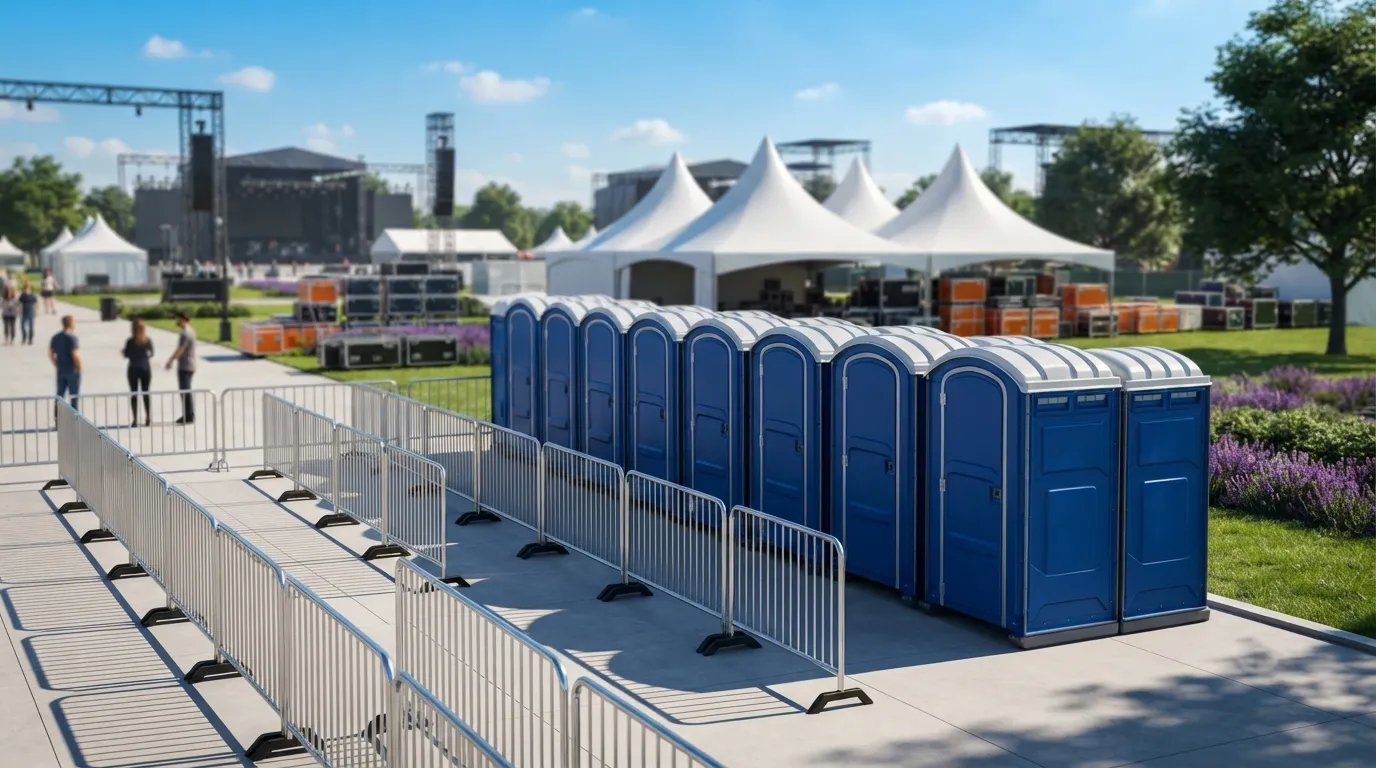
Pick level ground first. A standard unit measures about 44 by 48 inches on the ground and stands roughly 92 inches tall, so it needs a flat spot clear of slopes that could tip it after rain. Set it away from storm drains and property lines, and leave the service truck a straight approach since most Newark lots are tight compared to open lots in Kearny, 4.5 miles northeast. If you're placing units for a build downtown, check the construction site services page for how crew counts drive unit counts under OSHA 1926.51(c)(1). Keep foot traffic in mind too: workers should not cross active equipment paths to reach the standard porta potty rental unit. For events, the event restroom rental placement logic is different because guest flow matters more than truck access. A porta john rental tucked behind a dumpster or fence line usually fails inspection, so give it its own visible footprint.
Do porta potty placement rules require a permit in Newark?
Sometimes, and it depends on whether the unit sits on private property or spills into the public right of way. If a unit, dumpster, or fence line touches the sidewalk or street, placement in the right of way needs confirming with the City of Newark before delivery. We do not have a fee schedule or ordinance number to quote here, so treat it as a call to make, not a guess to trust. This applies whether you're renting a single portable restroom rental unit or staging a full temporary fence rental around a demo site. The same caution applies to a roll-off dumpster rental: a dumpster placement permit is a real thing in many New Jersey municipalities, and dumpster placement permit cost varies by town, so check before the container lands on a curb strip. Our dumpster permit requirements page walks through what to ask the city. For general permit questions on toilets specifically, see porta potty permit requirements.
What clearance does delivery equipment need?
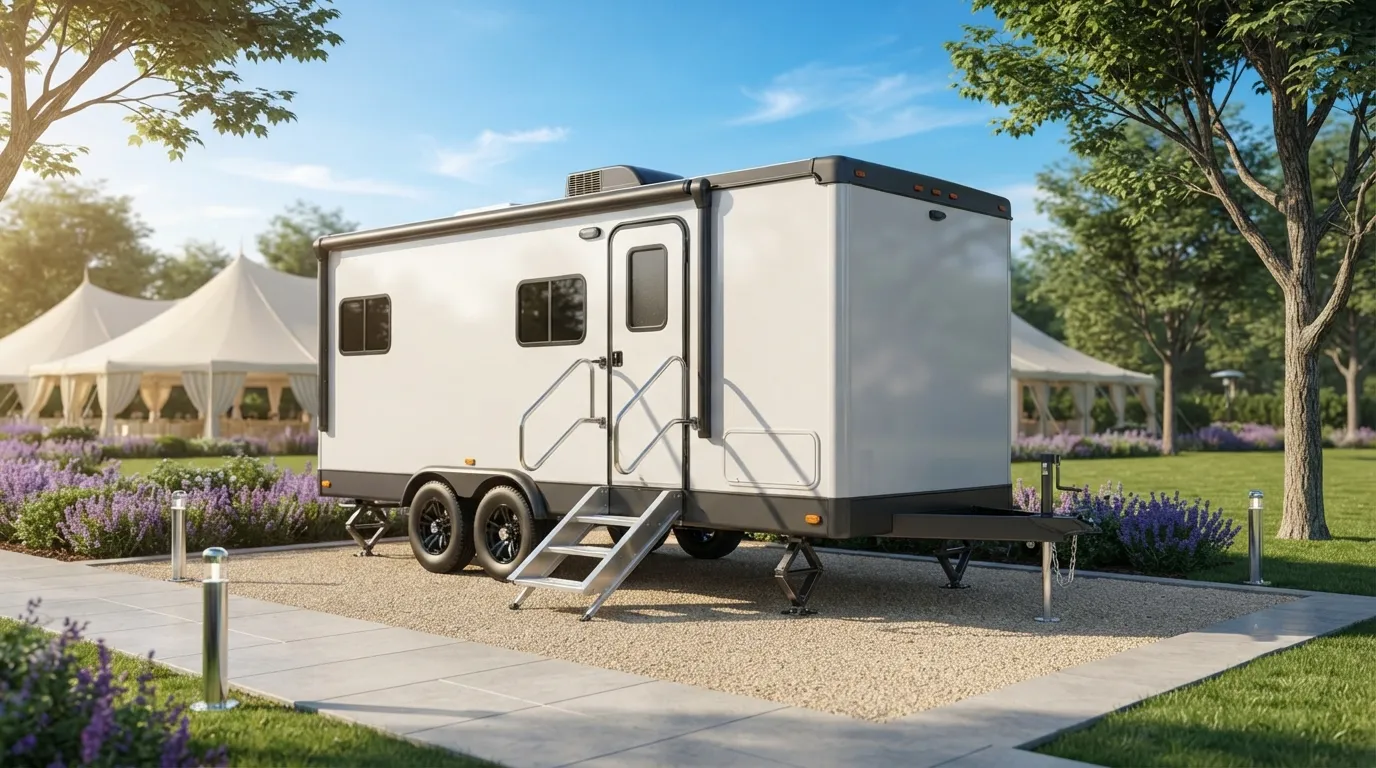
A roll-off delivery truck needs about 60 feet of straight clearance behind the truck to set a container down safely, and a porta potty service truck needs a comparable straight shot to pump and swap units without a three-point turn on a residential block. Narrow Newark alleys and shared driveways can make this the hardest part of the whole plan, more so than the unit itself. If your lot cannot give a straight 60 foot approach, tell the dispatcher before delivery day so they can route a smaller truck or adjust placement. This matters just as much for a storage container rental or a 40ft storage container as it does for sanitation equipment. Sites near Harrison, 2.5 miles northeast of Newark, and Irvington, 3.7 miles west, often deal with the same alley-width problem, so the clearance rule travels well across the cluster. Mobile office trailer replacement doors are a separate repair issue, not a placement one, but a trailer set too close to a fence line makes future door swaps harder, so leave swing room from day one when you place a mobile office trailer rental.
Are ADA accessible units placed differently?
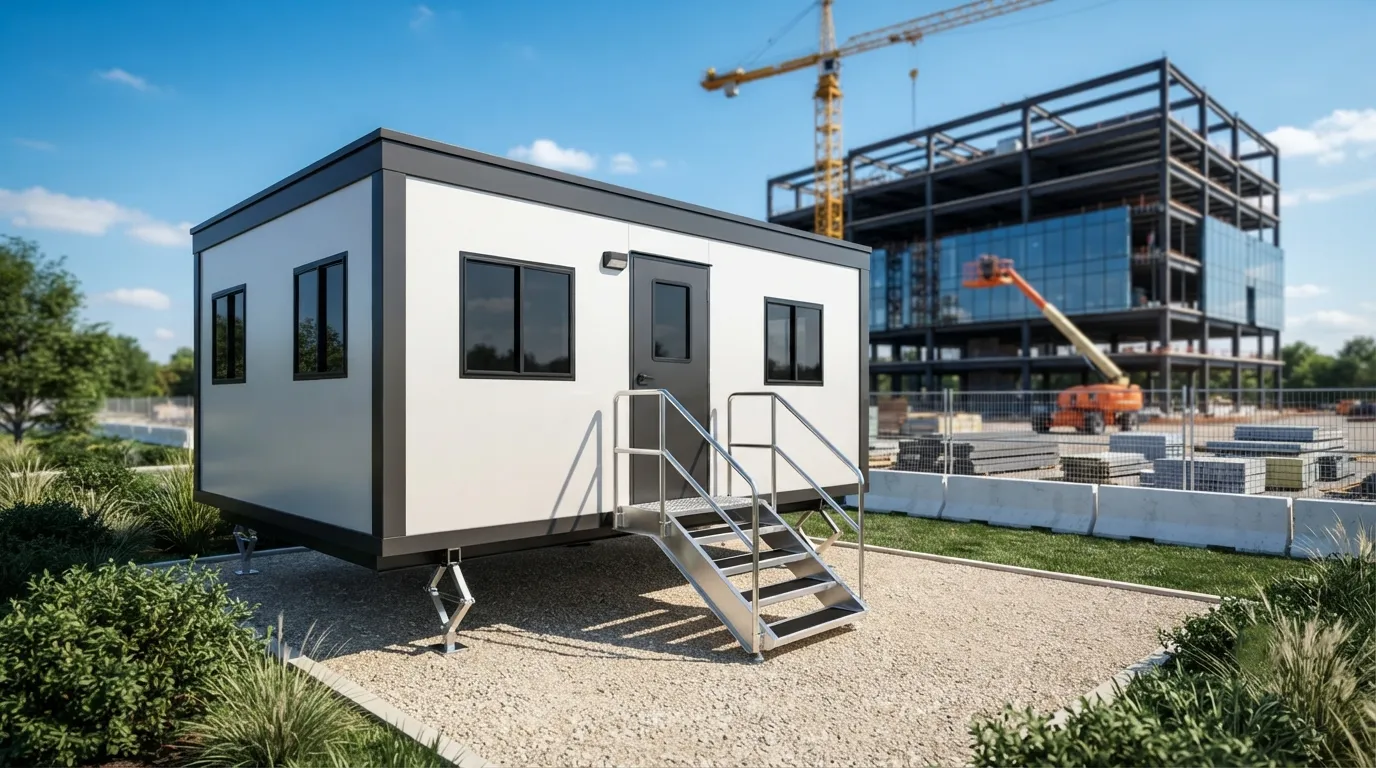
Yes. An accessible unit needs a 60 inch turning circle inside or beside it per ADA Standards section 304.3.1, plus an unobstructed route at least 36 inches wide per ADA Standards section 403.5.1 leading to the door. The door opening itself must clear 32 inches per ADA Standards section 404.2.3. When units are clustered on a site, ADA Standards section 213.2 requires at least 5 percent of the cluster, and never fewer than one unit, to be accessible, so plan the accessible unit's pad size before the rest of the layout. Ground under and around it should be stable and slip resistant under ADA Standards section 302.1, which rules out gravel or soft turf as a pad. Our ADA accessible porta potty page has more on unit specs, and the broader ADA restroom requirements guide covers reach ranges and door hardware force limits under ADA Standards section 309.4.
Placement quick reference
| requirement | spec | source |
|---|---|---|
| unit footprint | 44 by 48 inches | field spec |
| unit height | 92 inches | field spec |
| accessible route width | 36 inches minimum | ADA 403.5.1 |
| accessible door width | 32 inches minimum | ADA 404.2.3 |
| turning circle | 60 inch diameter | ADA 304.3.1 |
| roll-off truck clearance | 60 feet straight | field spec |
How far from a building should a porta potty sit?
Far enough that the door swings fully open without hitting siding, steps, or parked cars, and close enough that the service truck can reach it in one pass. There's no fixed municipal distance in our records for Newark, so the practical rule is clearance for the door and the truck, not a tape-measure number.
Can I place a porta potty on the street in Newark?
Only with confirmation from the city, since street placement falls in the public right of way. Treat this the same way you'd treat a dumpster permit requirements question: ask before delivery, not after a ticket shows up.
Does an Ozark River portable sink need special placement?
It needs a level, stable surface near the work area, similar to a standard handwashing unit. For parts questions like an Ozark River portable sink replacement parts search, that's a maintenance issue separate from placement; see portable sink rental for unit options.
How many units does a Newark job site need?
OSHA 1926.51(c)(1) sets ratios by crew size: 1 toilet for 20 workers or fewer, scaling up from there. Our how many porta potties do i need guide runs the math for bigger crews.
Is septic pumping placement the same as porta potty placement?
No. Septic access depends on tank location, not job layout, and a residential tank is typically pumped every 3 to 5 years. If you're searching placerville septic pumping service by mistake, this crew covers Newark; see septic pumping service for scheduling.
Next step
Get a delivery date
Tell us the address, the dates and the headcount. We size the order and confirm the route.