
What Does OSHA Require for Farm Sanitation?
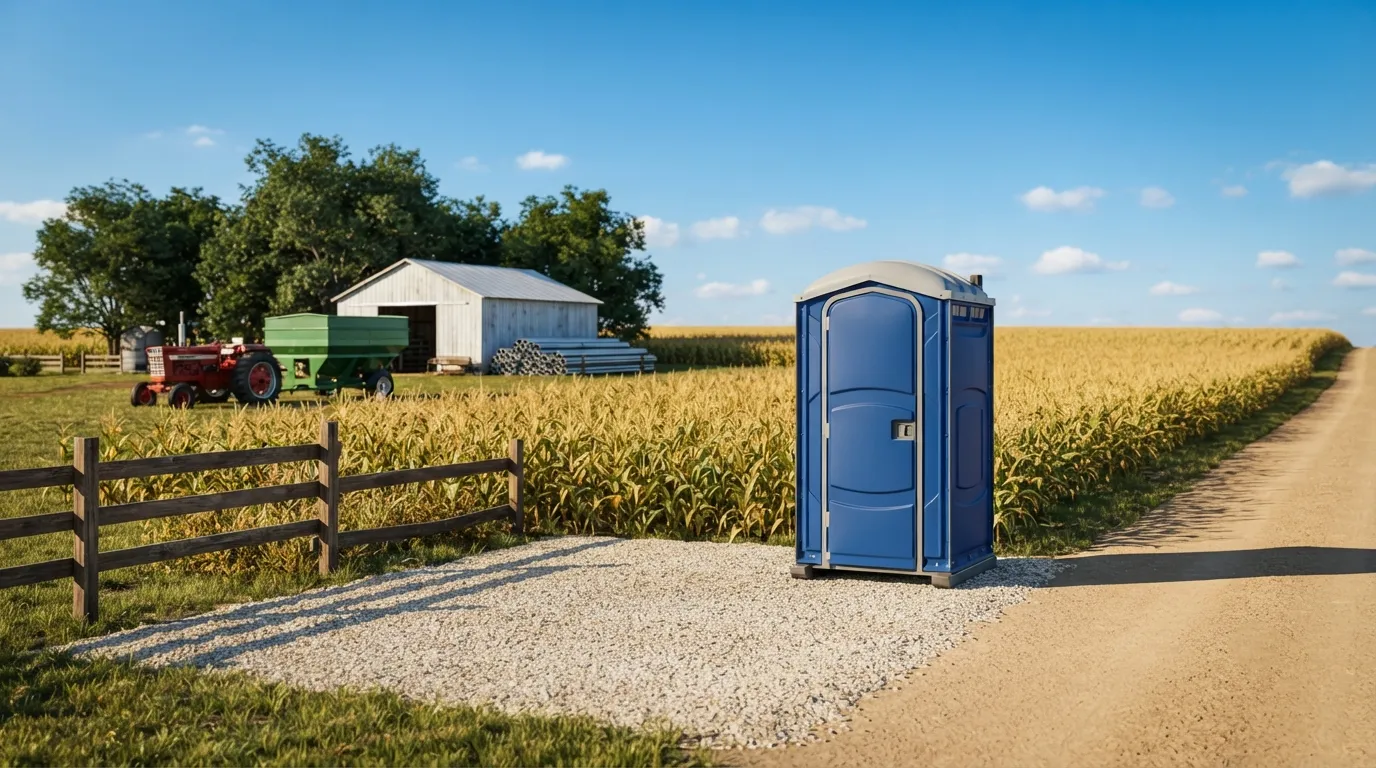
Hand-labor operations fall under OSHA 1928.110, a different rule than the construction standard. It sets the same one-per-20-worker ratio you'd expect on a jobsite, but adds a distance limit: every unit has to sit within a quarter mile of where people are actually working the field. That matters on a large parcel, because one bank of portable toilet rental units near the barn does nothing for a crew picking rows a half mile out. Newark Porta Pros maps placement against your field boundaries before delivery, not after. Construction crews on the same property, building a barn or fixing fence lines, fall under a separate ratio in OSHA 1926.51(c), so a mixed farm and building site sometimes needs two counts running at once. We work through that math with you rather than guessing, and if you'd rather see the ratio spelled out first, our how many porta potties do I need page covers it too. Every unit also needs water under OSHA 1926.51(a)(1), which is why we pair standard porta potty rental units with a filled tank, not an empty shell. If your operation runs seasonal hand-labor crews, check our how many porta potties do I need guide before you call, so the quote matches your headcount from the start.
Where Should Units Go on a Working Farm?
Placement on a farm is not the same problem as placement on a paved lot. Ground has to hold the weight of a delivery truck, and access roads get muddy fast after rain. A standard unit runs about 44 by 48 inches on the ground and stands about 92 inches tall, small enough to tuck at the edge of a field road without blocking equipment turns, and it's the same footprint we use for porta john rental setups elsewhere in the county. Our porta potty placement guide covers ground stability in more detail, but the short version for farm work: gravel pads or packed dirt near the field edge beat soft turf every time, and we will tell you if a spot looks wrong before we unload. Roll-off access is a separate question. If you're clearing brush, fencing, or old equipment alongside restroom service, a delivery truck needs about 60 feet of straight clearance behind it, which rules out tight turns between outbuildings. That's worth checking before you order a roll-off dumpster rental for a cleanup phase, and our dumpster sizes and dimensions page can help you pick the right container size first. Newark farms and nurseries close to the city line sometimes combine restroom service with a same-visit dumpster drop, and we plan the truck route for both at once rather than sending two trucks on two different days.
How Often Are Farm Restrooms Serviced?
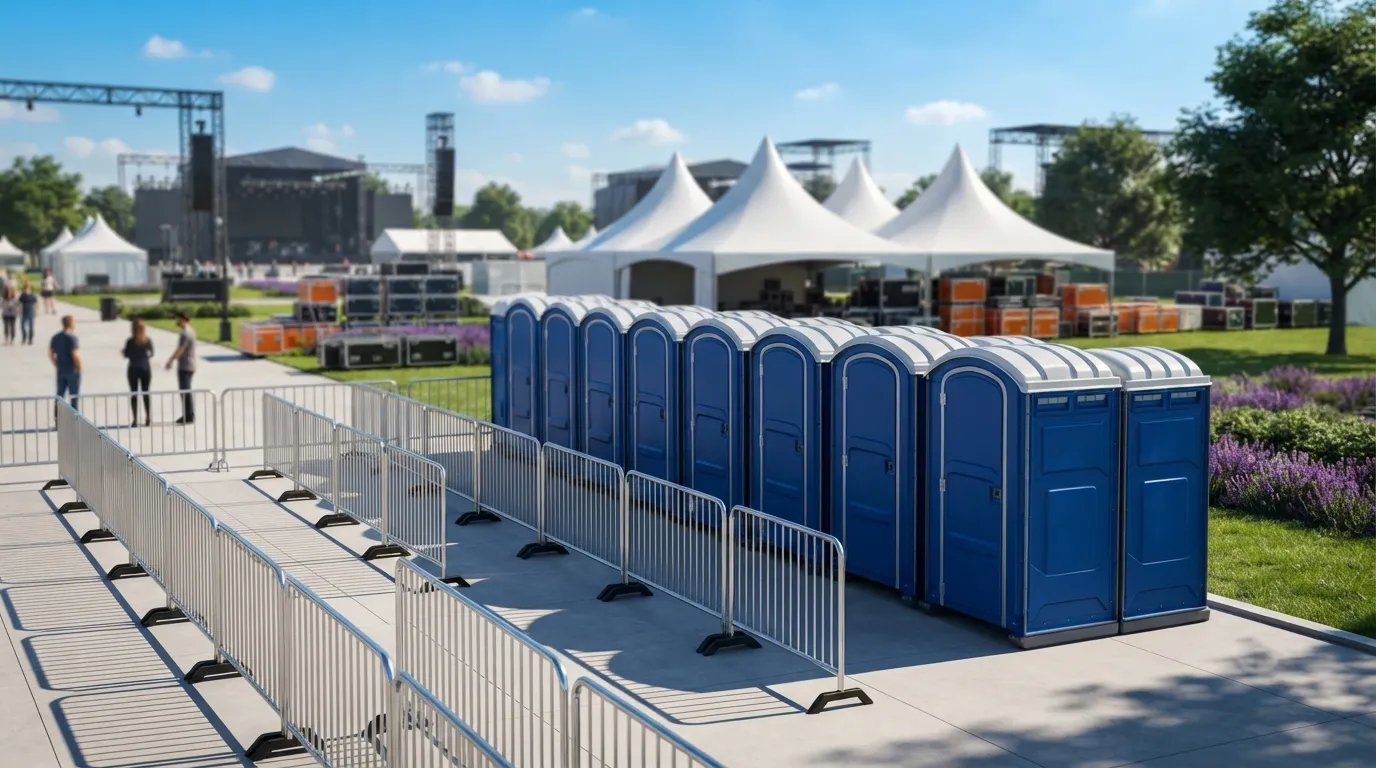
Weekly service is the baseline under ANSI/PSAI Z4.3, which sets one visit per week for up to 10 users over a 40 hour week as the standard interval. A harvest crew running long hours or a bigger headcount needs more frequent pumps, and we adjust the schedule up rather than making a crew wait. Each standard unit carries a 60 to 70 gallon holding tank, enough for a normal week at moderate use but not enough to skip a visit during peak harvest with a full crew in the field. Handwashing is a separate requirement from the toilet itself: 29 CFR 1910.141(d)(2) calls for soap and a way to dry hands, and hand sanitizer alone doesn't satisfy it. That's why we pair toilet units with an actual handwashing station rental rather than leaving a sanitizer bottle on a post, and crews wanting a sink instead of a hand sanitizer stand can check portable sink rental. If your crew works with treated seed, pesticide, or herbicide application, OSHA 1926.51(f)(1) requires washing facilities specifically for that contaminant exposure, on top of the general field sanitation rule. Farms running seasonal help from Newark out toward Belleville, 5.9 miles north, or Irvington, 3.7 miles west, usually keep the same weekly schedule through the season and only add stops during harvest peaks.
Pricing for Farm and Field Setups
| unit | day | week | month |
|---|---|---|---|
| standard | $100 - $350 | $130 - $500 | $125 - $325 |
| delivery fee | $100 - $500 | $100 - $150 | $120 - $420 |
A single-season lease usually lands in the weekly or monthly range depending on how long the crew stays in the field, and if the season stretches on you might also compare a restroom trailer rental for larger crews. See monthly porta potty rental for a fuller breakdown, or check porta potty rental cost if you're still comparing against a daily rate for a short job.
How many restrooms does a 20-person harvest crew need?
Under OSHA 1928.110, a 20-person crew needs at least one toilet and one handwashing setup, placed within a quarter mile of the work area. Larger crews scale up from there, and if the crew is mixed with event staff for a harvest festival, our festival restroom rental page covers that ratio too. Our OSHA portable toilet requirements page walks through ratios above 20 workers.
Can we place units on unpaved field roads?
Yes, as long as the ground holds the truck's weight during delivery. Packed dirt or gravel works well. Soft or recently tilled ground can cause problems, so we check access before scheduling a drop for portable restroom rental, the same way we do for temporary fence rental staged near a work zone.
Do farm restrooms need handwashing stations separately?
Yes. Toilet units and handwashing are two different requirements under field sanitation rules, and soap plus a drying method is required under 29 CFR 1910.141(d)(2). Sanitizer alone doesn't meet it. See portable sink rental for standalone options.
What if our farm also runs construction work part of the year?
Then two ratios may apply at once: OSHA 1928.110 for field labor and OSHA 1926.51(c) for construction crews. We help you sort out which count applies where, and can set up construction site services alongside farm units.
How far will Newark Porta Pros travel for a rural site?
We serve Newark and nearby towns already mapped for delivery, including Kearny at 4.5 miles and Hillside at 5.0 miles. Contact us through request a quote with your address and we'll confirm the route and timing.
Next step
Get a delivery date
Tell us the address, the dates and the headcount. We size the order and confirm the route.