
How Do Porta Potties Work On A Job Site?
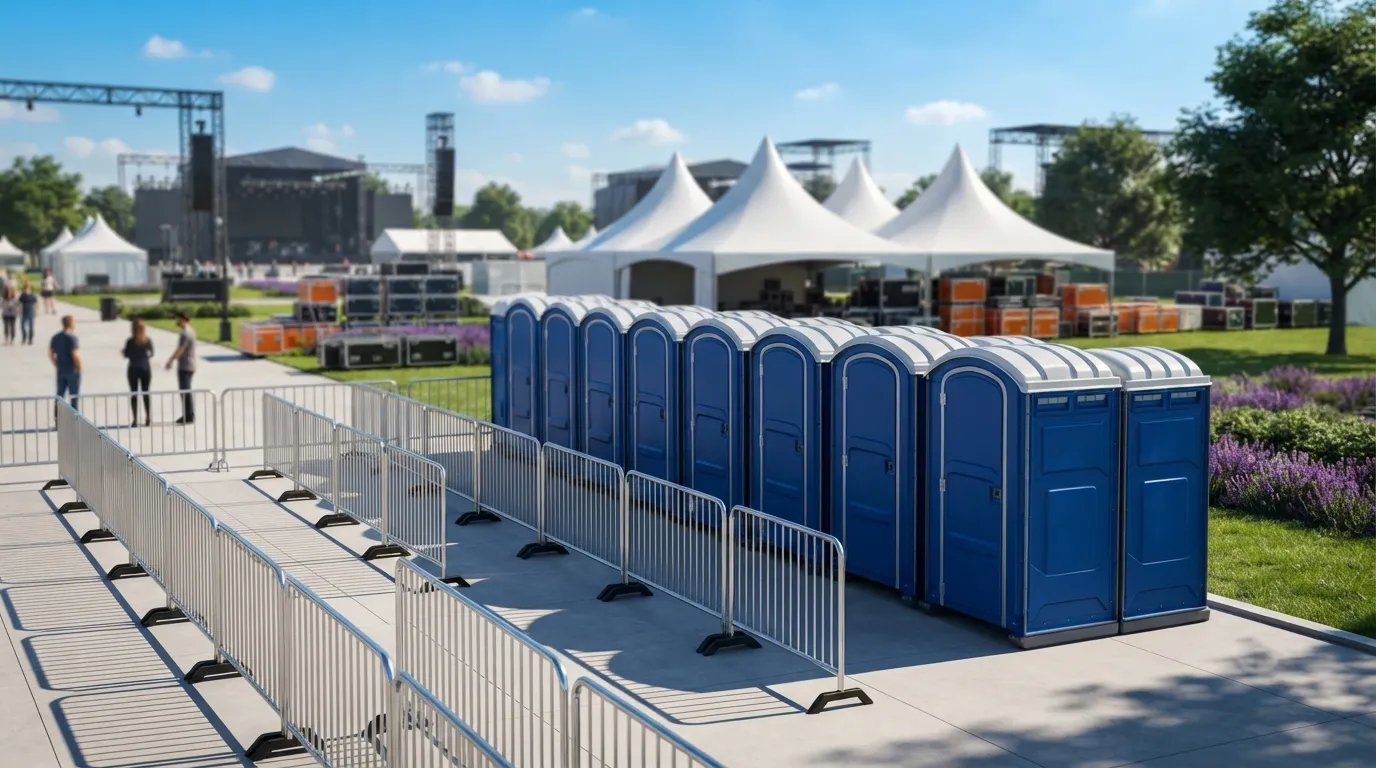
A construction worker running to a porta potty mid-shift doesn't think about what's underneath the seat, but it's a simple setup. The tank sits directly below the toilet opening and holds waste until Newark Porta Pros pumps it out during a scheduled service visit. Inside, a charge of blue deodorizing chemical breaks down solids and knocks back odor between visits. There's no water tank flushing anything away on a standard porta potty rental, which is why the unit needs no hookup and can sit almost anywhere on a lot. ANSI/PSAI Z4.3, the industry service standard, sets a baseline of one visit per week for up to 10 users across a 40 hour week, though busier sites need more frequent stops. OSHA 1926.51(c) sets the ratio crews actually plan around: one toilet for 20 workers or fewer, climbing to one toilet and one urinal per 40 once the crew passes that mark. A foreman scoping a Newark job with 35 hands on-site should check how many porta potties you need before signing anything, and cross-reference the OSHA portable toilet requirements so the count holds up during an inspection.
How Do Flushable Porta Potties Work?
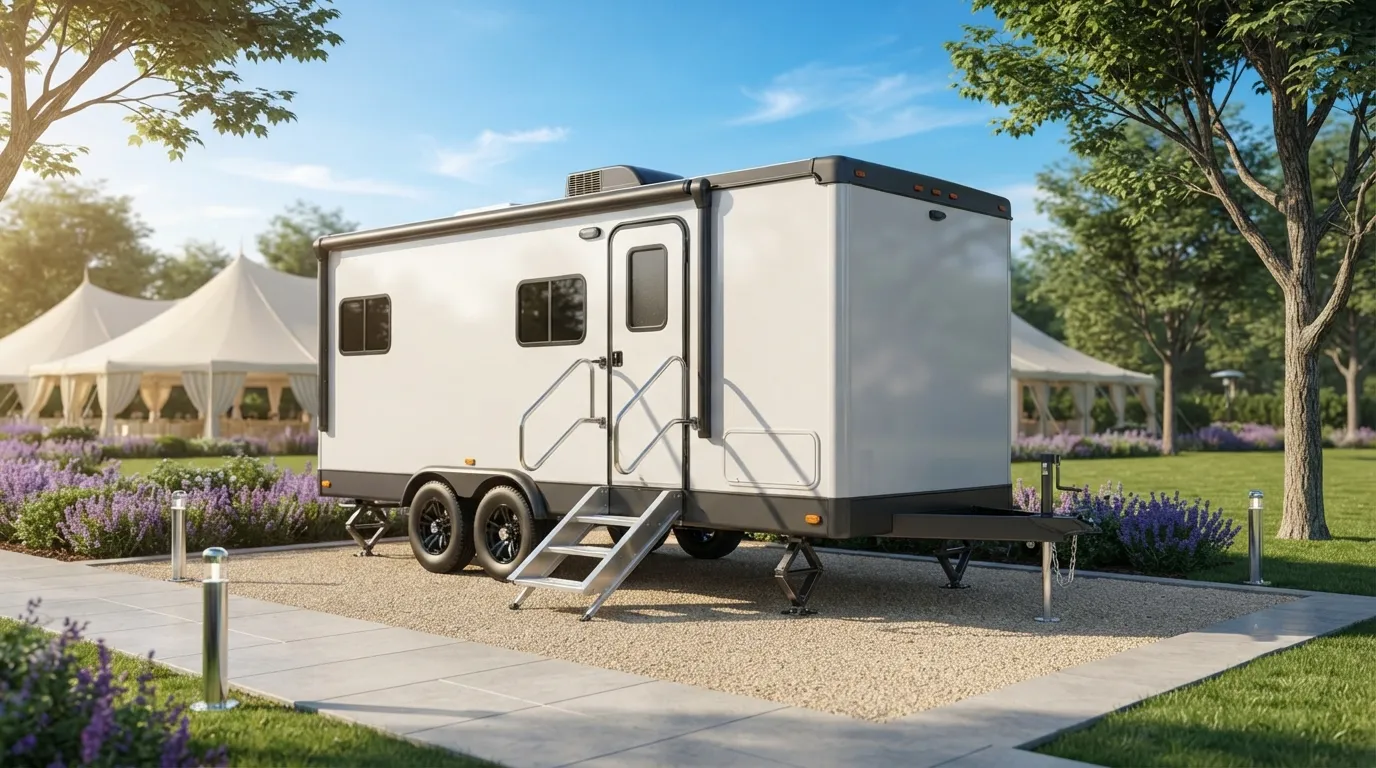
A deluxe flushable porta potty adds a small onboard freshwater tank and a foot pump or hand lever that pushes a rinse of water through the bowl after each use, dropping waste into the same style of holding tank below. It feels closer to a real bathroom, which is why weddings and corporate events in Newark tend to book them over the standard unit. Some deluxe models also carry a small sink, meaning guests get an actual rinse instead of just sanitizer. If the event needs more than one or two units, an event restroom rental package or a full restroom trailer rental usually makes more sense than stacking deluxe singles. A 2 stall restroom trailer still uses the same tank-and-chemical logic underneath, just scaled up with real fixtures.
How Does A Portable Sink Work?
A portable sink rental or standalone handwashing station pairs a freshwater reservoir with a foot pump or hand crank that pushes water through a spigot, and a separate greywater tank underneath catches the runoff. Soap dispenses from a side-mounted pump. That combination matters because 29 CFR 1910.141(d)(2) requires soap and towels or a hand-drying device at washing facilities, and a sanitizer bottle alone doesn't satisfy it. Crews doing painting, coating, herbicide or insecticide work fall under OSHA 1926.51(f)(1), which specifically requires washing facilities for those contaminant exposures, not just a courtesy sink. A hand sanitizer station rental is a fine supplement but it isn't a substitute where that rule applies. For sites unsure which standard applies to their crew size or scope, the handwashing station requirements page walks through both. OSHA 1926.51(a)(1) also requires an adequate supply of potable water at any place of employment, which is the other half of why these stations exist on a Newark job site at all.
How Do Camping Porta Potties Work?
Camping and remote-site units run the same tank-and-chemical system as a job site unit, just sized and placed for foot traffic instead of trucks. A standard unit measures roughly 44 by 48 inches on the ground and stands about 92 inches tall, small enough to tuck at a trailhead or a farm access road. For agricultural operations with hand-labor crews, OSHA 1928.110 sets its own standard: one toilet and handwashing facility per 20 employees, positioned within a quarter mile walk, which is why farm and agricultural restrooms in Newark and nearby Belleville, 5.9 miles north, get placed in clusters rather than one central spot. For weekend campers or a camping porta potty booking, a standard unit rents by the day or weekend rather than committing to a monthly term. Placement still matters: check the porta potty placement guide before picking a spot, since ground stability and truck access for pumping affect where a unit can actually go.
What Chemicals Go In A Porta Potty?
| service type | typical interval |
|---|---|
| standard porta potty | weekly, per ANSI/PSAI Z4.3 baseline |
| grease interceptor | pumped at 25% FOG and solids depth |
| residential septic tank | every 3 to 5 years |
The blue liquid in a standard unit is a deodorizing and bacteria-suppressing charge, not a harsh industrial cleaner, and it's what most people mean when they search portable toilet chemicals near me. It's a different product entirely from what goes into a septic tank cleaning chemical treatment, which some homeowners use between pumpings, though Newark Porta Pros generally recommends mechanical pumping over chemical additives for anything beyond routine tank charging. A grease interceptor gets pumped once fats, oils, grease and solids reach 25 percent of the liquid depth, a different maintenance trigger than a home septic tank, which typically needs pumping every 3 to 5 years depending on tank size and household load. If warning signs show up between cycles, the septic tank warning signs page covers what to watch for, and how often to pump a septic tank breaks the interval down further.
Do porta potties smell?
A well-serviced unit shouldn't smell strong past the first few seconds. The blue deodorizer suppresses odor between pumpings, but heat, overuse, or a missed service visit will overwhelm it fast. See do porta potties smell for what actually controls odor.
How often are porta potties cleaned?
ANSI/PSAI Z4.3 sets a baseline of one service visit per week for up to 10 users over a 40 hour week. High-traffic construction sites or events in Newark often need two or three visits weekly. Full details are on how often are porta potties cleaned.
Are porta potties ADA accessible?
Standard units aren't. An ADA accessible porta potty is built wider with a ramp and grab bars, meeting standards like a 60 inch turning circle under ADA 304.3.1. ADA 213.2 requires at least one accessible unit in any cluster of portable toilets.
What does it cost to rent a porta potty in Newark?
A standard unit typically runs $100 to $350 a day depending on term and delivery. Full monthly and weekly breakdowns sit on porta potty rental cost and monthly porta potty rental.
Can I get a porta potty delivered on short notice in Newark?
Often, yes, though availability depends on the week. For urgent jobs, emergency porta potty rental covers rush delivery options, and request a quote gets a same-day answer on stock.
Next step
Get a delivery date
Tell us the address, the dates and the headcount. We size the order and confirm the route.